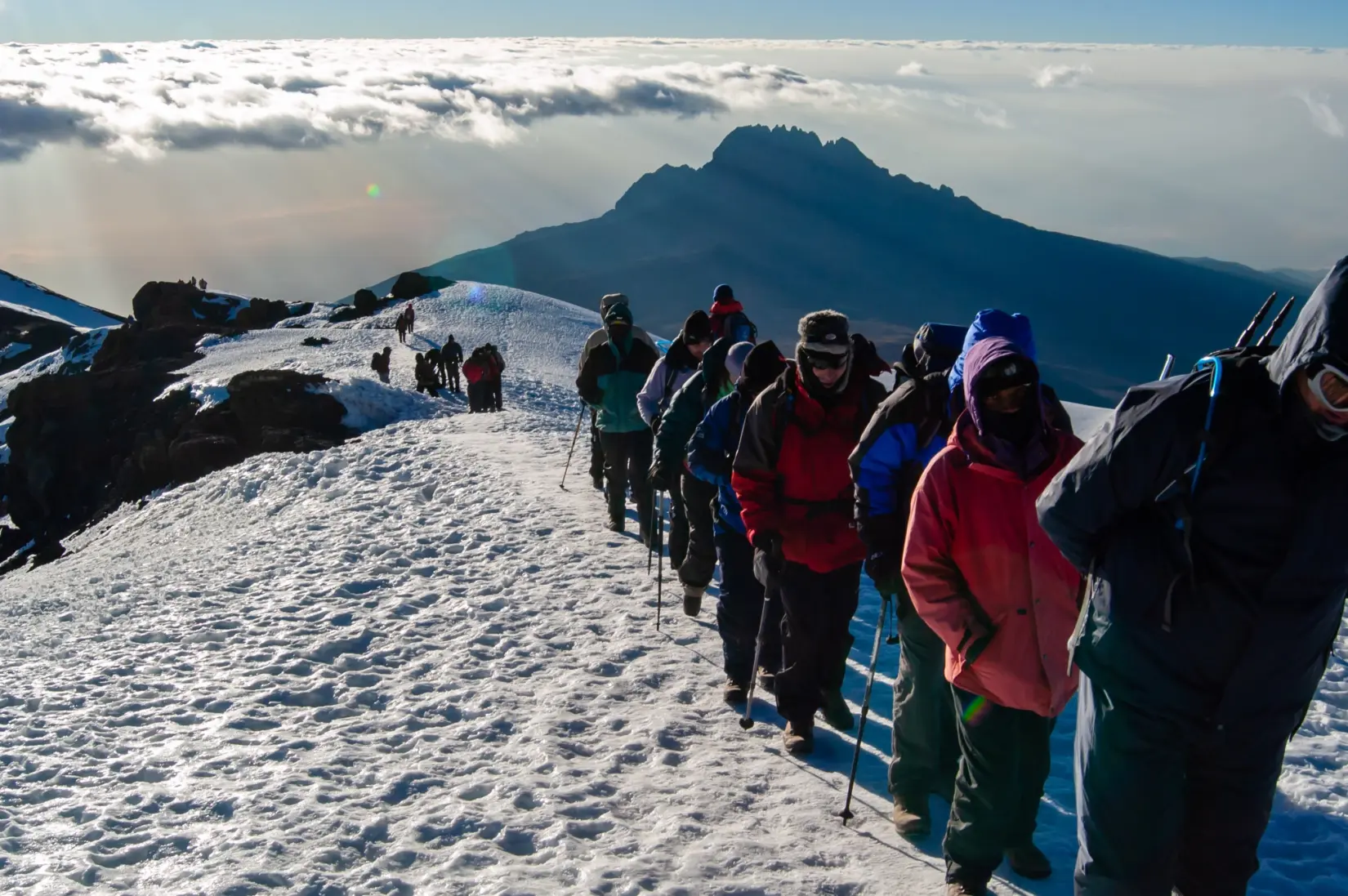
You don’t need specialized climbing gear—no ropes, ice axes, or crampons. Kilimanjaro is a non-technical trek, making it accessible to many fit and determined hikers.
That said, the climb is still physically demanding. Expect to hike up to 8 hours per day, with summit night stretching up to 12–16 hours in cold, dark, and oxygen-thin conditions.
2.
Altitude: The Greatest Challenge
At the peak, you’re dealing with just 49–50% of the oxygen available at sea level, a hurdle even for seasoned trekkers.
Altitude sickness—manifesting as headaches, nausea, fatigue, or dizziness—is seen in around 75% of climbers, and it’s the most common reason for failed summit attempts.
3.
Route & Duration Influence Difficulty
Longer treks not only ease altitude stress but boost success rates significantly:
Route
Days
Success Rate
Marangu (short)
5–6
~60–65%
Lemosho / Northern
8–9
~90–95%+
Short routes may be cheaper but come with higher risk due to insufficient acclimatization.
4.
Terrain, Weather & Environmental Challenges
Kilimanjaro traverses five distinct climate zones—from humid rainforests and alpine deserts to icy summit zones. Expect uneven terrain, loose scree, muddy trails, and dramatic temperature swings.
5.
Physical Training & Mental Resilience Are Key
While elite fitness isn’t required, good cardiovascular endurance helps. Prepare with hiking, stair workouts, and training with a weighted backpack.
Summit night is a true mental test—cold, drawn-out, and physically exhausting. Psychological mindset often separates those who summit from those who turn back.
6.
Safety, Success & Unexpected Risks
Success rates vary between 60–85% overall, increasing on routes with better acclimatization periods.
Fatality rates are low—around 0.03% to 0.1%, but most deaths are due to altitude-related complications.
Final Verdict: Challenging—but Achievable
Mount Kilimanjaro isn’t a technical climb—it’s a physical and mental journey through changing environments and thin air. With proper preparation, a longer itinerary, and the right mindset, many average-fit hikers reach the summit. But be clear: altitude and summit night are where the real challenge lies.